Farm & Food Network
Ridge to reef, mauka to makai
The Kamaole Ahupua'a feeds itself. The coastal population and visitor demand in Kamaole are met by Upcountry Kamaole farms and ranches accessed via Kealakapu Road. From pasture and diversified crops on the slopes of Haleakalā to farmers markets and food trucks on the Kīhei coast, this network connects growers, processors, distributors, and markets — reviving the ahupua'a model of living sustainably within your watershed.
The Significance of Water
How ancient Hawaiian water principles shape the ahupuaʻa — and this project
Are you growing, raising, processing, or distributing food in the Kamaole Ahupua'a?
Join the network!
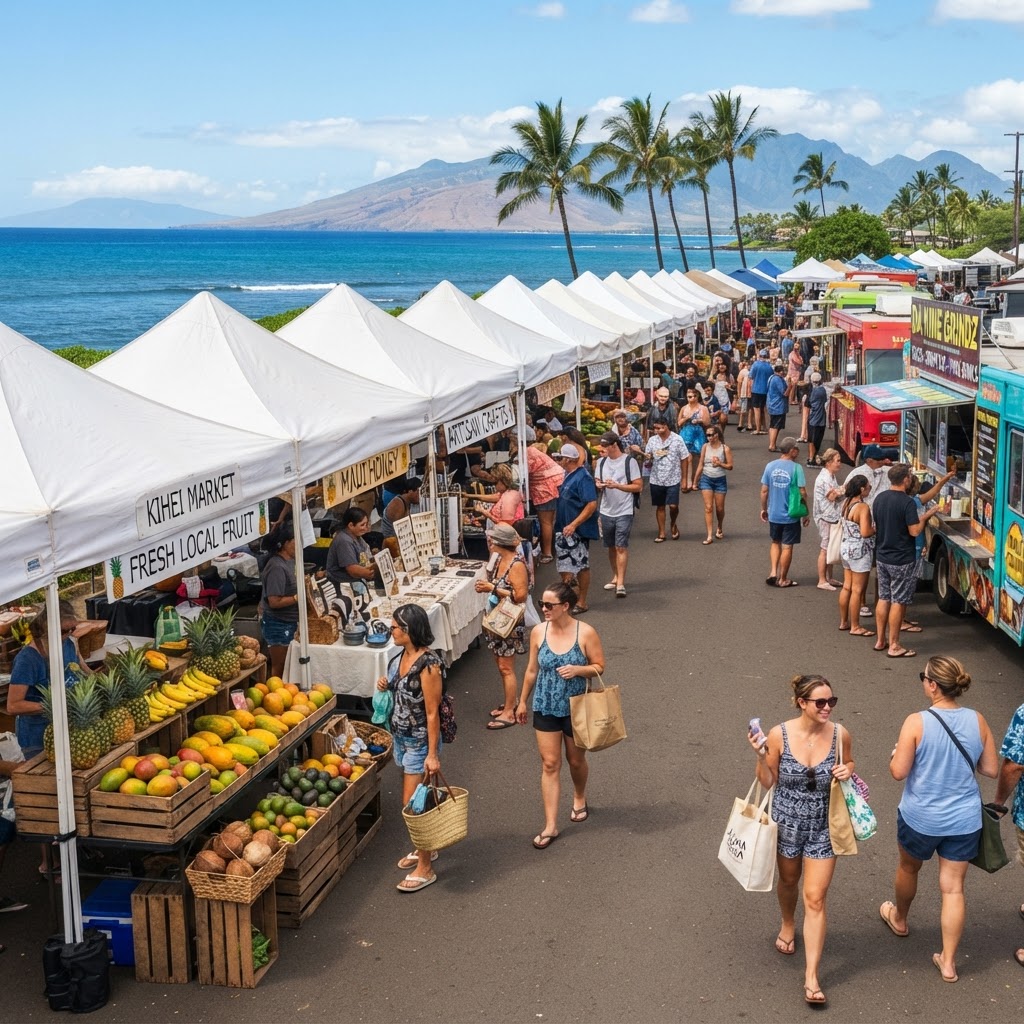
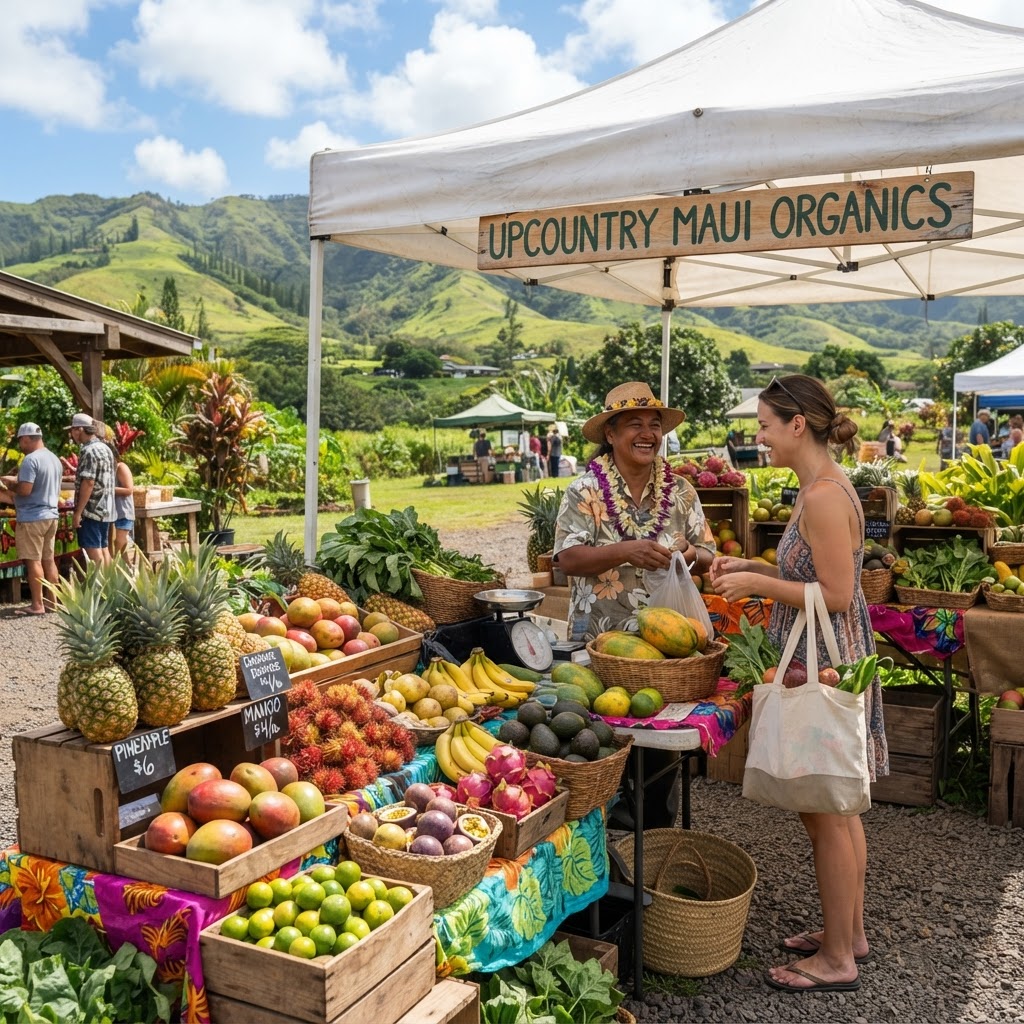 Market
Artisan & Farmers Market at South Maui Gardens
35 Auhana Rd, Kihei, HI 96753
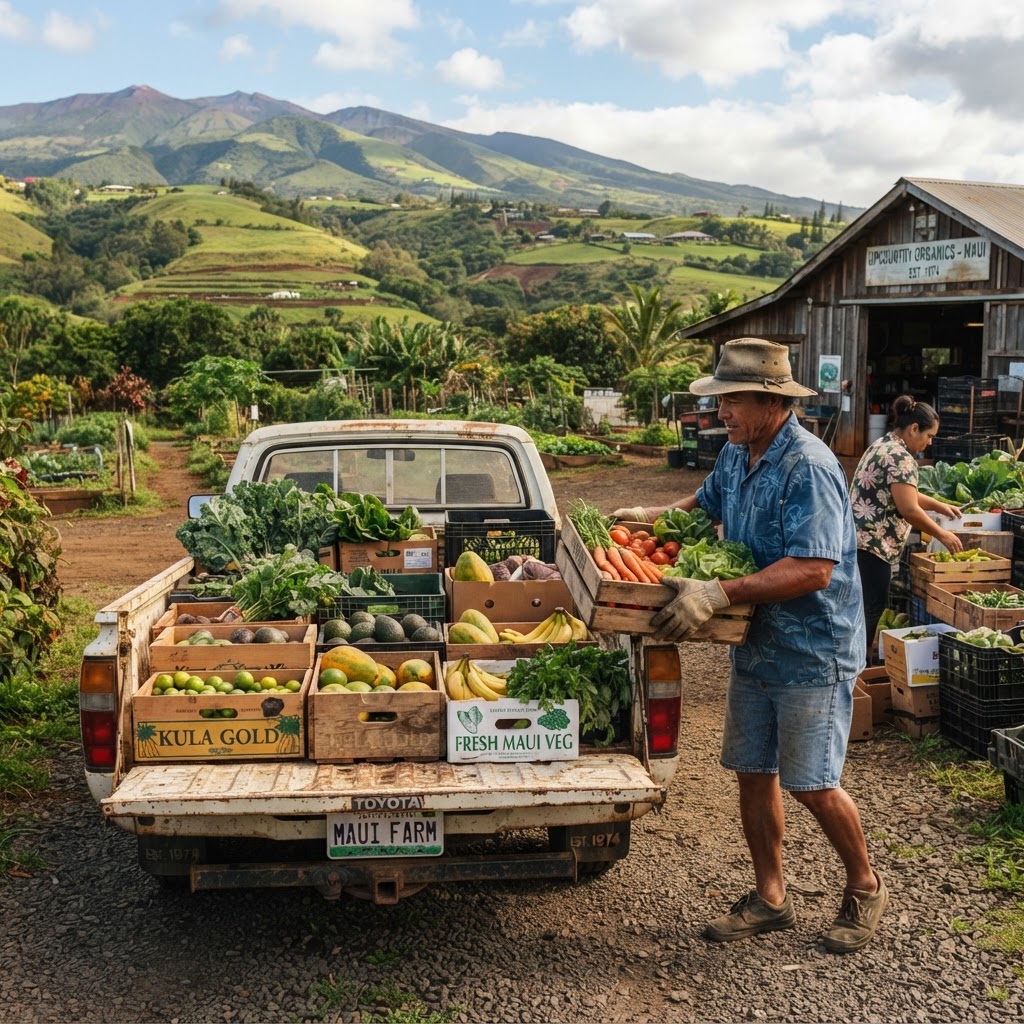
Weekly distribution point for local produce and artisan goods, held at South Maui Gardens.
 Distributor
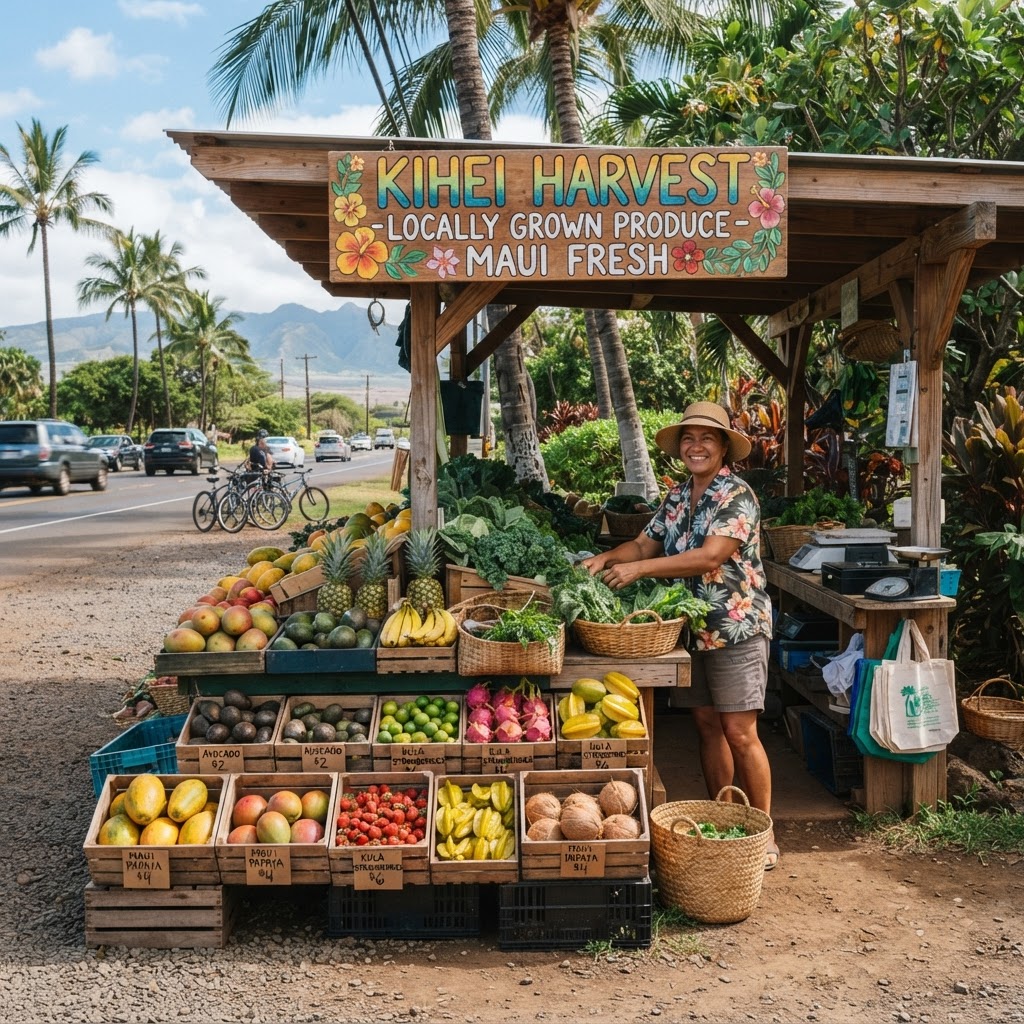
Farmers Market Maui
61 S Kihei Rd, Kihei, HI 96753
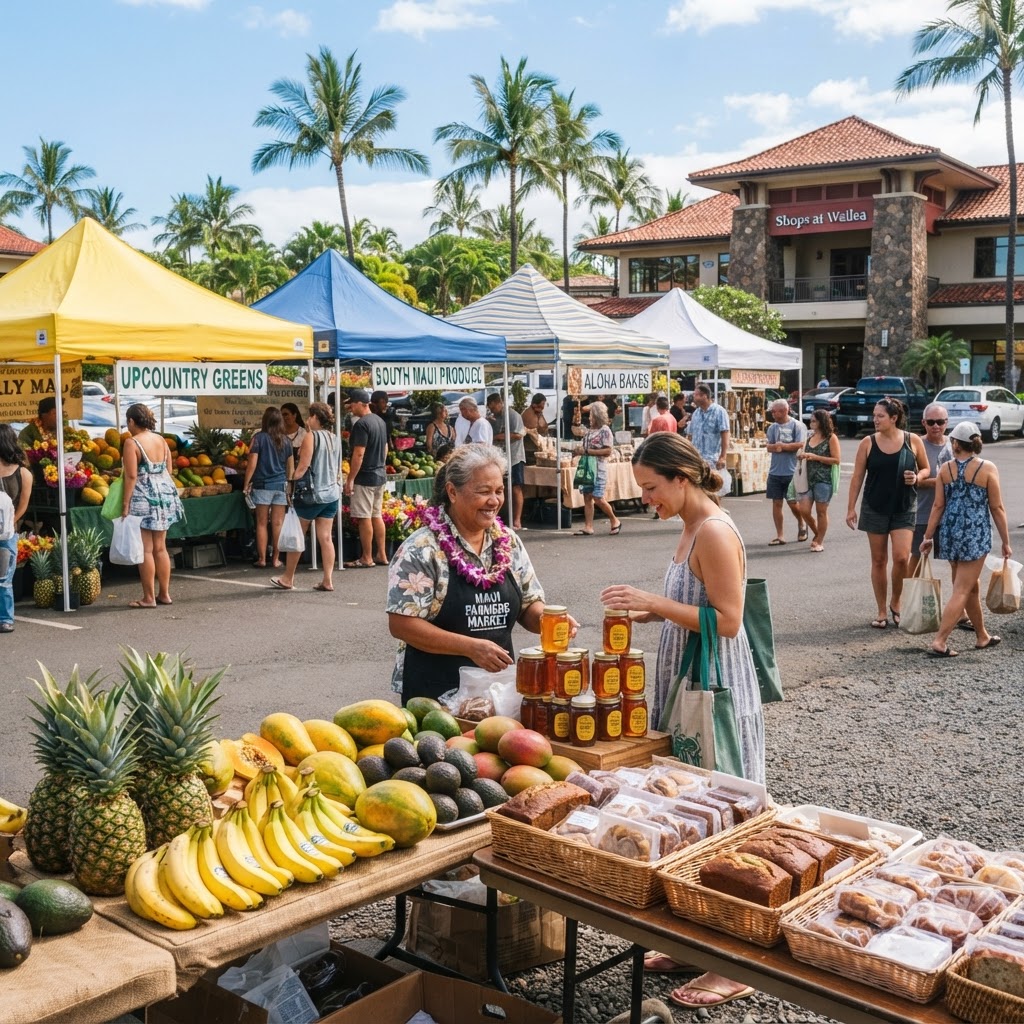
A group of local growers selling direct. Open most weekdays; call to confirm hours. North end of Kihei.
 Market
Ko Mahi'ai Makeke (Kukui Mall)
1819 S Kihei Rd, Kihei, HI 96753
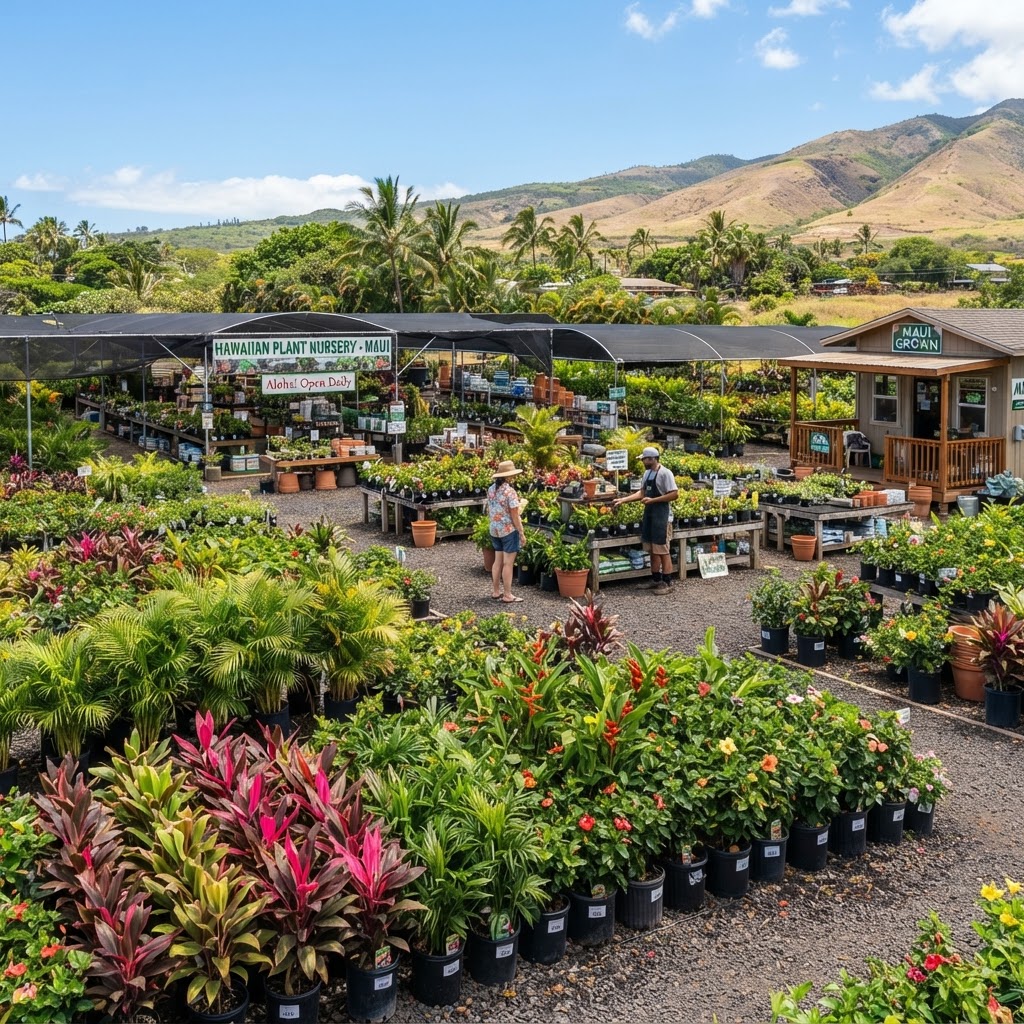
Weekly outlet for Maui-grown produce, fruit, honey and baked goods. Just north of the ahupua'a; the closest Saturday market for Kamaole producers and residents.
 Grower/Producer
Upcountry Kamaole
The mauka farmlands
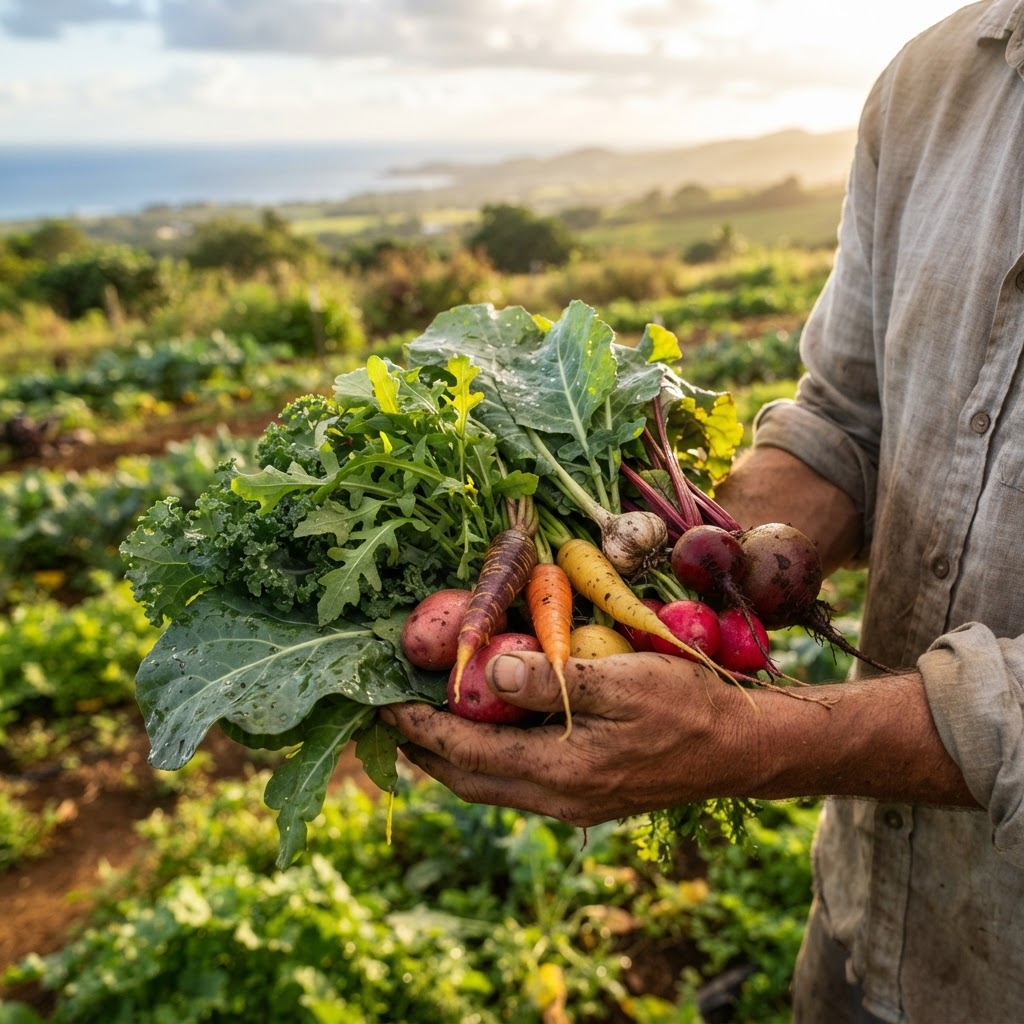
The mauka portion of the ahupua'a — accessed via Kealakapu Road on the slopes of Haleakalā — receives 25–35 inches of annual rainfall and is served by the historic Kula Pipeline. Per the state's 2020 Agricultural Use data layer, this land is in pasture, diversified crop, and seed production use.
These Upcountry landowners and growers are being invited to claim their listings as the network develops. If you farm or ranch in the Kamaole Ahupua'a, — your listing helps connect Kamaole's coastal community to its mauka food sources.
Major Landowners Upcountry
Who holds the mauka lands of the ahupuaʻa
Dryland Taro & Sweet Potato
How a "barren" coast was fed
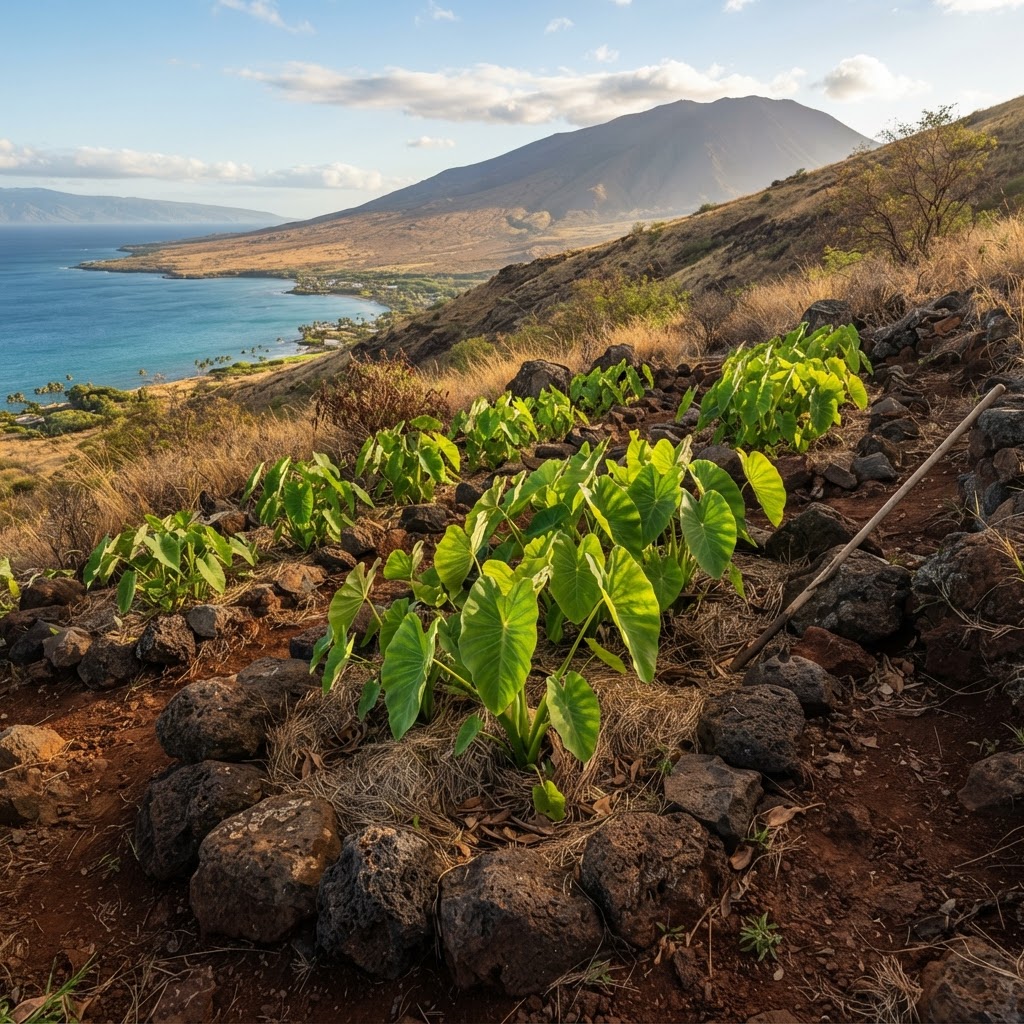
Yet the name "Kamaʻole" — barren — never told the whole story. The dry leeward coast was poor for wetland lo'i kalo, the flooded taro ponds that fed the windward valleys, but it was well suited to dryland cultivation — the older Hawaiian method of growing food without standing water. Long before the engineered lo'i, islanders planted dryland taro (kalo) in mulched pits and rock-bordered plots called māla, relying on seasonal rains and morning dew rather than stream-fed ponds. The rocks held the heat of the day and the moisture of the night, and a thick layer of leaves and compost kept the soil cool and damp through the long dry season — a patient, water-wise agriculture matched to a coast that saw little rain.
Alongside the taro, families grew ʻuala — sweet potato — as the true staple of the leeward coast. Sweet potato thrives in dry soil where taro fails, tolerates salt wind, and stores for months in the ground, so it became the crop that fed Kihei. Planted in the kula lands above the shore, it was harvested through the dry months when nothing else grew, and a single planting could feed a household for a season. The old Hawaiians set cuttings at the right phase of the moon, banked the vines against drought, and read the red volcanic soil the way a wetland farmer read a stream — knowing exactly how much water each plant would need and when.
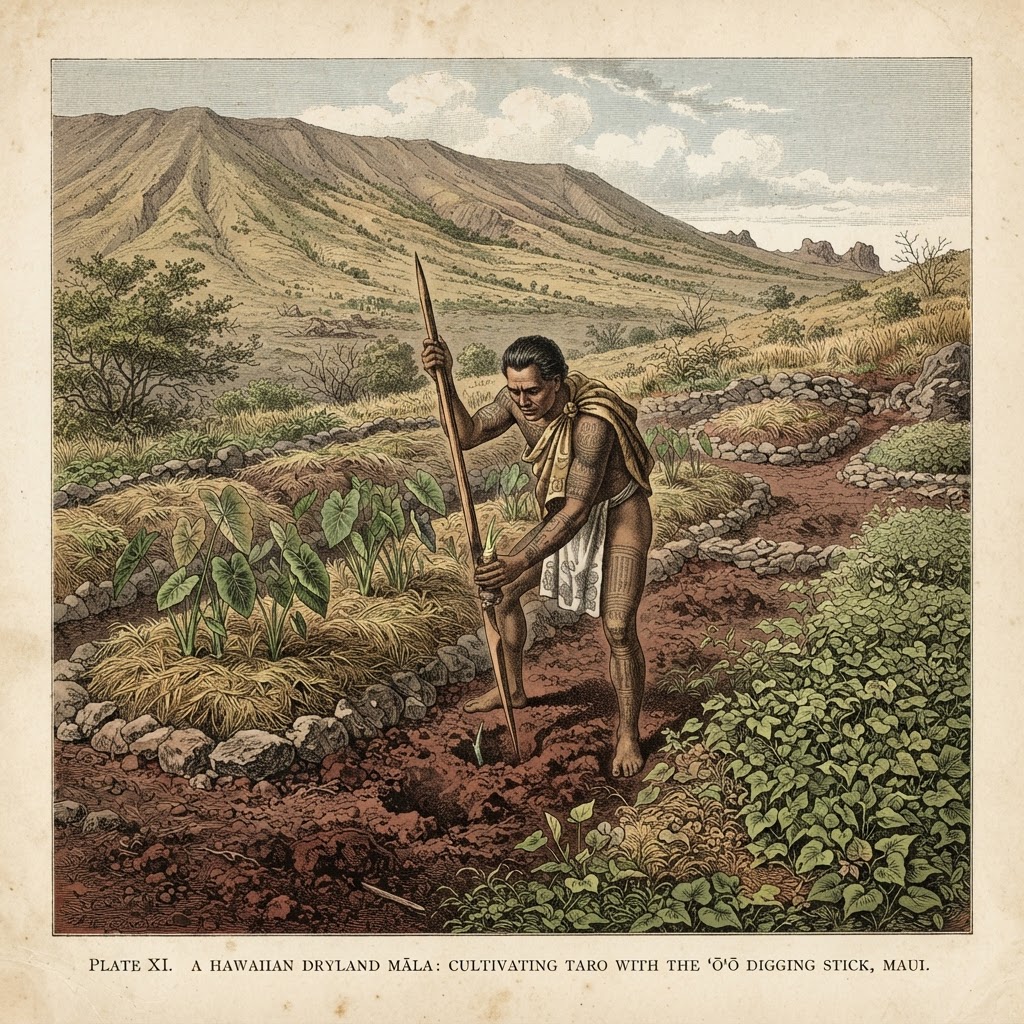
The primary tool was the ʻōʻō — a single sharpened hardwood digging stick, four to six feet long, that served as plow, shovel, and cultivator. With only the ʻōʻō and their hands, Hawaiian farmers broke the red volcanic soil, dug the mulched pits for taro corms, and set sweet potato cuttings without turning the ground the way a steel plow would. The method was deliberate: minimal disturbance kept moisture in the soil and left the fragile leeward topsoil intact, so the field held across years rather than washing out in a single season.
Planting followed the Hawaiian lunar calendar (māhina), which named each night and told farmers what could be done under it. Sweet potato cuttings were set on specific moon phases believed to encourage vigorous vines and deep tubers; taro was planted on nights associated with root growth. The calendar also marked the kapu seasons — the makahiki period of tribute and rest from late October through January, when agricultural labor paused and communities gathered for ceremony, games, and the accounting of the harvest. A farmer who ignored the calendar risked planting into drought or wind; one who followed it worked inside a system refined over centuries of observation.
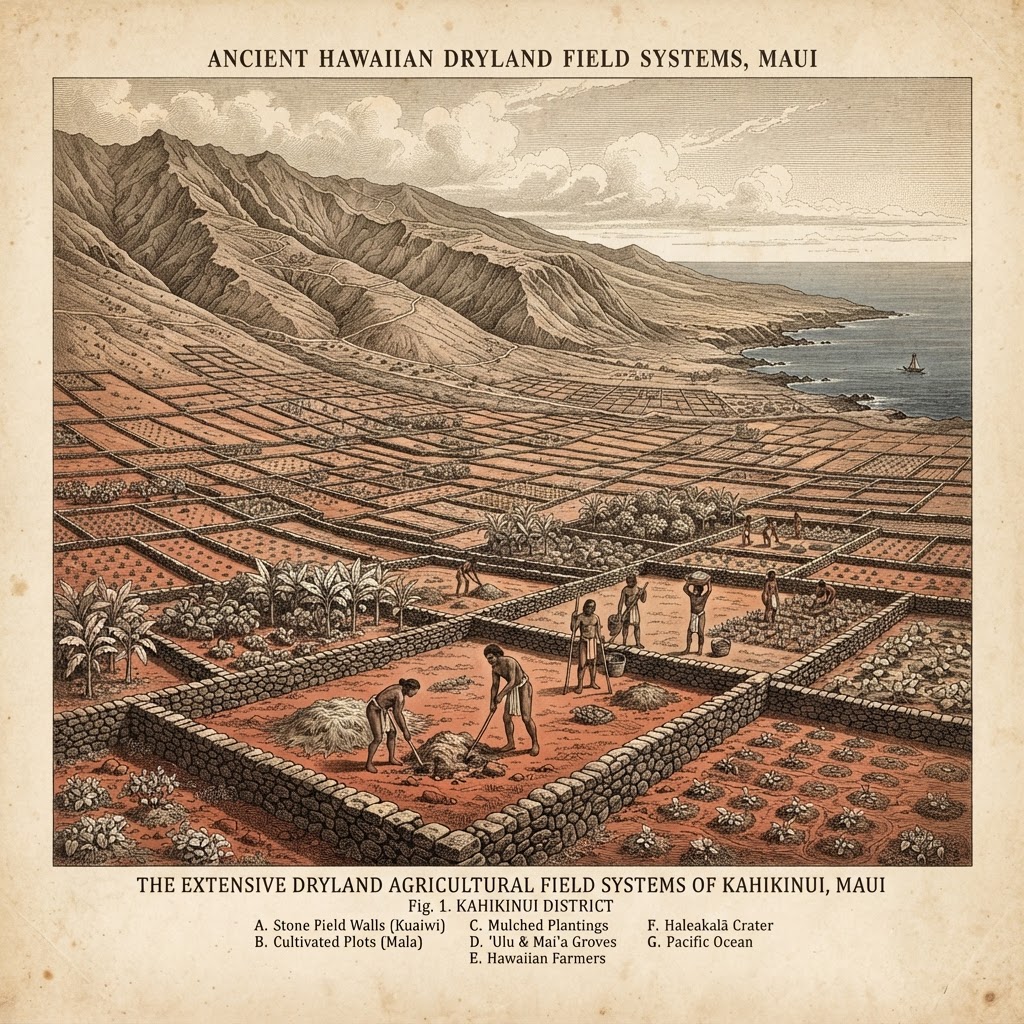
The kula lands above the shore were not random gardens but organized dryland field systems — large tracts bounded by low stone walls and crossed by planting trails, with plots assigned to families and managed by the konohiki. On Maui, the great dryland systems of Kahikinui and Kaupō, just south of Kamaʻole, show how extensively the leeward slopes were farmed: miles of stacked-stone field boundaries, mulch pits spaced in grids, and trail networks connecting garden plots to coastal villages. Kamaʻole's own fields were a smaller echo of the same system, feeding the coastal population and producing a surplus for trade.
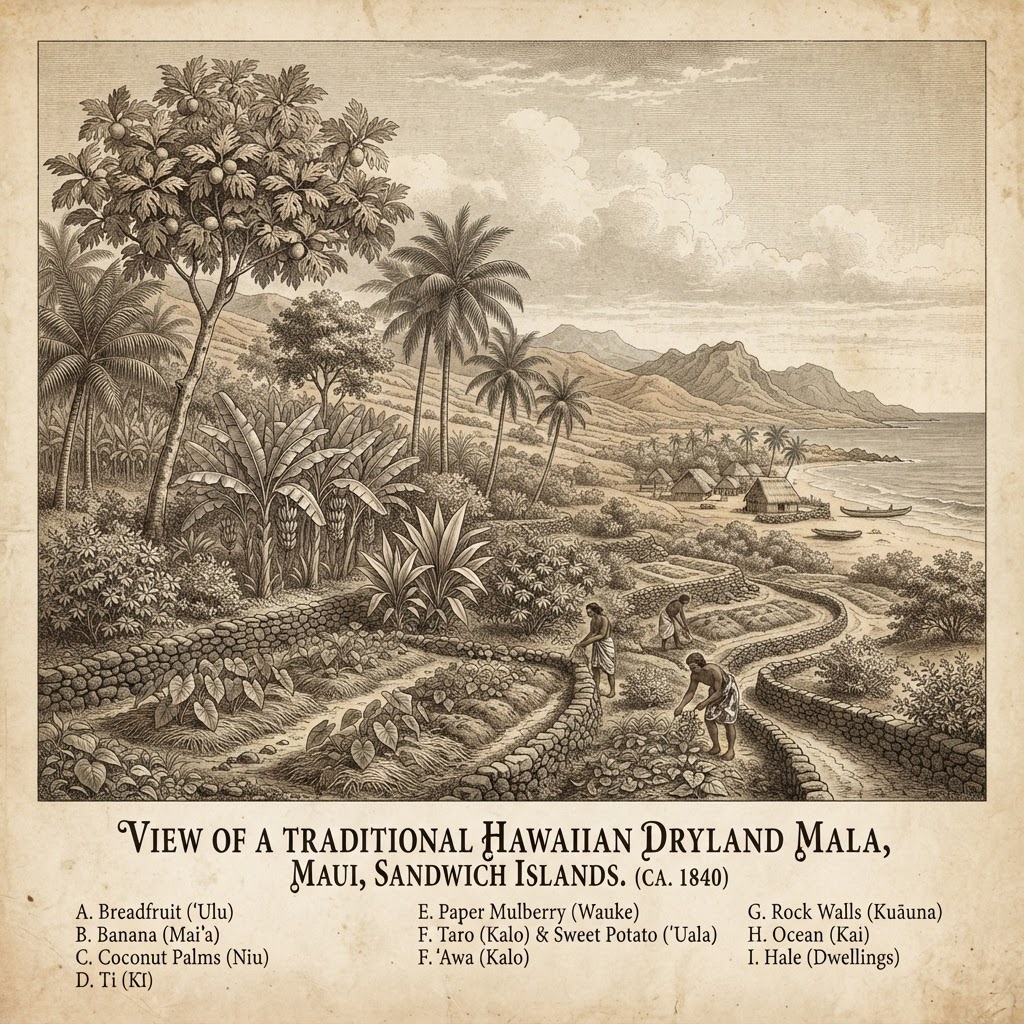
Beyond taro and sweet potato, the dryland māla carried a whole companion planting of survival crops: ʻulu (breadfruit), whose large starchy fruit ripened in waves and could be fermented into maiʻa ʻulu paste that kept for months; maiʻa (bananas), grown in sheltered pockets; kī (ti plant), whose leaves wrapped food and whose roots fermented into a sweet brew; wauke (paper mulberry), cultivated for the bark that became kapa cloth; and niu (coconut) along the strand. Together these formed a layered food forest — canopy trees above, root crops below — that turned even thin leeward soil into a reliable pantry.
These crops turned a "barren" coast into a productive one, and they tied Kamaʻole into the wider ahupua'a through trade. Sweet potato and dryland taro grown makai were carried mauka in exchange for wetland taro, timber, and the forest products the dry coast could not produce — a flow of food that mirrored the flow of water from ridge to reef. The lesson holds: the old Hawaiians read the land closely and matched each crop to the water and soil it could actually offer, so that even the driest corner of the island carried its weight in the system. Restoring that kind of attention — fitting what we plant to what the land can truly bear — is part of what a modern konohiki, digital or otherwise, is asked to do.